+1 (401) 328 1478 (Call/WhatsApp) info@auratrails.com




Known as Bhutan’s toughest and most legendary trek, the 17-Day Snowman Trek is often called one of the hardest in the world. Over 17 days, it leads through highland remoteness, pristine valleys, and rugged landscapes of the Himalayas, crossing quite a few passes above 5,000m.
Starting out in Paro, the trail goes through villages like Laya and Thanza, offering a chance for cultural exchange with yak herders as one obtains an insight into authentic Bhutanese life. The trek offers staggering scenery, glacial lakes, and dramatic views of peaks like Jomolhari, Masagang, and Gangkar Puensum. This 17-Day Snowman Trek offers adventure, culture, and wild nature.
Your first views of the Himalayas await you as you arrive in Paro (2,250m). Freshening up at the hotel after being greeted with respect, the day’s sightseeing covers the main sights of Paro; here one goes to Rinpung Dzong, an imposing fortress-monastery, and to the National Museum, the latter of which puts forth Bhutanese art, culture, and history.
Explore Paro town, admiring its traditional wooden houses, prayer flags, and local shops. The evening is spent acclimatizing, recovering, and enjoying one’s first meal of Bhutanese cuisine. Overnight accommodation at Paro, cradled in green valleys and tranquil hills, prepares guests for the activities ahead.
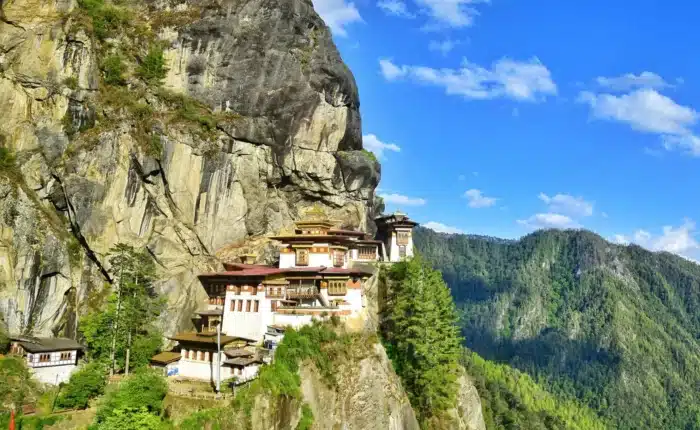
On the second day, the day’s planned destination is the Tiger’s Nest Monastery, also called Taktsang, which is situated on a cliff at 3,120 meters, for good reason. The upward trail passes through pine forests, mani walls, and fluttering prayer flags. The monastery is one of Bhutan’s holiest sites and considered the exact spot where Guru Rinpoche himself meditated in the 8th century.
At the top, enjoy panoramic views of the Paro Valley and soak in the spiritual atmosphere. Descend back for an evening return to Paro after visiting the monastery. This acclimatization provides an opportunity for the body to adjust to the altitude in preparation for the challenging days ahead. Overnight stay in Paro.
After breakfast on the third day, the trek from Tashimakha will start, going through winding trails in the forests and across rivers and valleys that will give you a little taste of rural Bhutan. From Tashimakha, trekkers will continue to the village of Laya (3,800m), which is one of the highest villages in Bhutan.
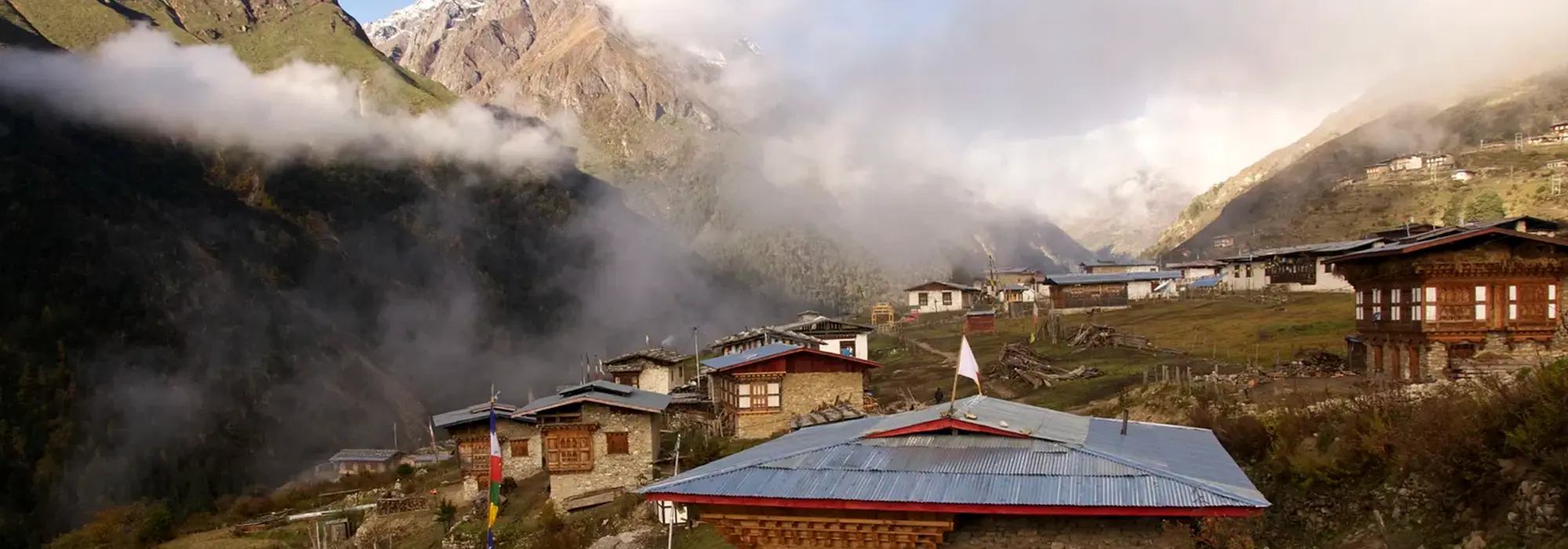
The path is an effortless climb through forests and alpine meadows. By the evening, you will reach Laya, where the villagers have arranged to welcome you, each dressed in their own regional attire and wearing bamboo hats. Experience a unique world through an introductory visit to Laya’s cultural traits, traditional wooden houses, and snow-capped peaks. Then enjoy a night of camping in Laya.
On the fourth day, the route in Laya climbed through beautiful, dense forests and open areas. The trail winds along yak-herding routes, passing huts and vibrant meadows filled with seasonal wildflowers. With a rise in elevation, the landscape turns a bit more rugged and provides sweeping mountain views.
The trek to Rodophu (4,200m) is rewarding but draws you into the pristine highlands of Bhutan. After reaching it, start camping in a giant meadow with snow-dusted peaks surrounding you. This remote campsite is perfect for some much-needed serenity prior to the night skies clearing away and filling in with stars alongside the music of rivers and whispers of wind. Overnight camping at Rodophu.
On the fifth day, you’ll walk from Rodophu to Narithang (4,900 m). The pathway gently climbs through rocky terrain and alpine meadows, with awe-inspiring views of Mount Gangla Karchung and other Himalayan giants. As the trekkers slow down and savor the reward deeply, the air becomes increasingly thinner.
Blue sheep and other wildlife traverse the slopes. After several hours of hiking, you will reach Narithang, a high-altitude campground that offers lovely views of the surrounding peaks. This exposed plateau, swept by winds, offers a true Himalayan experience. With the stars twinkling high above the encampment, you will be ready for crossing one of the highest passes of the trek tomorrow. Overnight stay at Narithang.
On the sixth day, your journey is both effortful and rewarding. As soon as you start, a sharp climb awaits you to reach Gangla Karchung La Pass (5,200m), which is one of the highest passes on the trek. From the top, there are cool views of Mount Masagang, Tsendagang, and Jejekangphu. A gradual descent awaits all the way to Tarina Valley with wide stretches of alpine meadows and glacial streams.
The whole landscape transforms staggeringly from harsh alpine land into relatively smooth and green valleys dotted with junipers. The trek is long during the day, and the sights of nature will leave an eternal mark on your heart. Reach Tarina (altitude 3,980m), a peaceful campsite surrounded by the forest and rivers. Overnight camping in Tarina.
On the seventh day, hikers will find that the path softly ascends again among the pine and fir forests, which are scattered with birches and rhododendrons, as they hike downwards along the riverbank from the village of Tarina. Moreover, the trekkers can witness the local lifestyle in Bhutan’s most remote areas as they traverse through yak pastures and isolated mountain villages.
The last part of the hike will take you to the village of Woche (3,800m), a small place charmingly set in a circle of rolling grassland and snowclad mountains. Pitch your tents just outside the village and the village folk will inhale the peace and the beauty of the mountains. Overnight camping at Woche.
On the eighth day, you will enter the remote highlands, beginning with the ascent over Keche La Pass (4,480 m). From the top, splendid views of Table Mountain and the nearby ranges greet you. Gliding down through glacial valleys, you pass yak herder camps and giant meadows.
The descent leads gradually to Lhedi (3,650 m), a small settlement along the Pho Chhu River. Rugged cliffs surround the village, providing a unique cultural experience. Interact with locals in the evening and learn about their simple mountain life that is full of hardships but tougher still. Camping in Lhedi is quite pleasant, as the river sound lends to the calm ambience.
On the ninth day, once the descent from Lhedi is over, the route traverses along the Pho Chhu River valley, affording sweeping panoramic views of the Table Mountain and rows of snowy ridges. Traditional villages and old-aged stupas line the route. The path is quite moderate, allowing lots of time to appreciate the surroundings.
Reach the remote village of Thanza (4,150m) after several hours, where time seems to pause. The village is renowned for its stone houses, yak pastures, and dramatic mountain backdrop. Set up camp near the village and immerse yourself in the local culture, soaking in the peaceful highland environment. Overnight camping at Thanza.
On the tenth day, after the trekking days, it is a rest and acclimatization day in Thanza. Walk around the village or spend some time staring plainly at the traditional way of highland-Bhutanese life. You can embark on long or short hikes to nearby ridges that provide breathtaking views of Table Mountain and glacial valleys.
Stop and relax at Thanza’s peaceful ambiances, take photographs, or just absorb the silence emanating from the Himalayas. This rest day gives your body time to adjust before you continue to higher and more remote reaches of the trek. Overnight camping in Thanza, embraced by Bhutan’s majestic mountains.
On the eleventh day, leaving behind Thanza, the trail now gradually goes through alpine meadows and rocky slopes. Cuts through glacial streams and yak pastures as it goes higher and into barren lands. After several hours, reach Tshochena, a majestic campsite next to a high-altitude lake at 4,950 m.
It has snowy peaks and provides awesome reflections during sunrise and sunset. This remote camp is more or less felt as if seldom set in by anyone. The air here is crisp and thin, making it the perfect place to experience the wild beauty of Bhutan in its purest form. Overnight camping at Tshochena under clear, starry skies.
On the twelfth day, the day begins with a gradual climb to Loju La at 5,150 meters, sending some views of the surrounding Himalayan ranges into memory. Ascend through valleys dotted with alpine lakes and wildflowers during the season.
The trail then follows glacial rivers and barren tables before reaching another breathtakingly beautiful high-altitude campsite, Jichu Dramo (4,950m). Surrounded by impassable peaks, the campsite offers splendid views of the sunset. The thin air does slow down the trekking somewhat, but the mountain views provide adequate motivation. Overnight camping at Jichu Dramo with the winds of the Himalayas singing you into sleep.
On the thirteenth day, after leaving Jichu Dramo, the path gradually continues across Rinchen Zoe La Pass (5,320 m), which is one of the highest passes on this route. From the top, the view of the never-ending peaks and valleys is forever unforgettable. The descent leads into alpine valleys sprinkled with small lakes and streams.
As you approach the end of a challenging but rewarding day, you will reach Chukarpo (4,950 m), a remote campsite nestled among high ridges. The location offers solitude, magnificent skies, and peaceful surroundings. Camping here allows you to fully experience Bhutan’s wilderness. Overnight stay at Chukarpo, soaking up the silence of the Himalayas.
On the fourteenth day, from this point onwards, the trail meanders through rugged highland terrain with gentle ascents and descents. You cross over little ridges, passing pristine alpine lakes at intervals before reaching Tampetsho (4,350 m). This campsite sits by the edge of a charming turquoise lake surrounded by mountains, one of the most beautiful sceneries on the entire trek.
The reflection of the peaks on the lake, especially during the dawn or dusk, is stunning. It is a great spot for taking photos and just soaking in the atmosphere and unwinding after a hard day. Tonight, camp by the cool lakes, soaking in the solitude of Bhutan’s unspoiled beauty. Overnight camping at Tampetsho.
On the fifteenth day, after climbing a small pass gradually to begin the day, one descends through open meadows and pastures. The trail affords panoramic views of the snow-clad mountain peaks opposite green valleys below. Moving along yak herder camps, it offers some glimpses of nomadic life in Bhutan’s highlands.
In the afternoon, we made our way to Maraothang (3,610m), a lower-altitude campsite surrounded by forests and rivers. The warmer climate at lower altitudes and the thicker vegetation here offer a refreshing contrast. You will be camping overnight at Maraothang, where a comfortable night awaits you closer to the valleys of Bhutan.
On the sixteenth day, descent through forests of rhododendron, fir, and pine will be gradual on your last trek day. The trail cuts through streams and meadows, providing views of birds and wildlife. In the afternoon, you will reach Nika Chhu Zam, where a vehicle will be waiting for you. Travel down to Thimphu, the capital of Bhutan.
The transition from days in grandeur to city life is wonderful. Upon reaching Thimphu, check into the hotel, refresh, and enjoy a leisurely evening while savoring Bhutanese cuisine. Overnight stay in Thimphu, celebrating the end of your epic Himalayan trek.
On the seventh day, after breakfast, return to Paro for your international departure. Enjoy your last views of Bhutan’s valleys, rivers, and prayer flags fluttering in the wind. At the airport, say goodbye to your guide and the Land of the Thunder Dragon.
The trek has taken you across high passes, remote villages, glacial valleys, and cultural experiences, an adventure full of unforgettable memories. Leave Bhutan with much gratitude, carrying in your heart the spirit of its mountains, monasteries, and kind-hearted people.
| No. of Pax | Starting Price | Enquiry |
| 1 pax | USD 1050 per person | Send Enquiry |
| 2 to 5 pax | USD 950 per person | Send Enquiry |
| 6 to 8 pax | USD 875 per person | Send Enquiry |
| 9 to 10 pax | USD 795 per person | Send Enquiry |